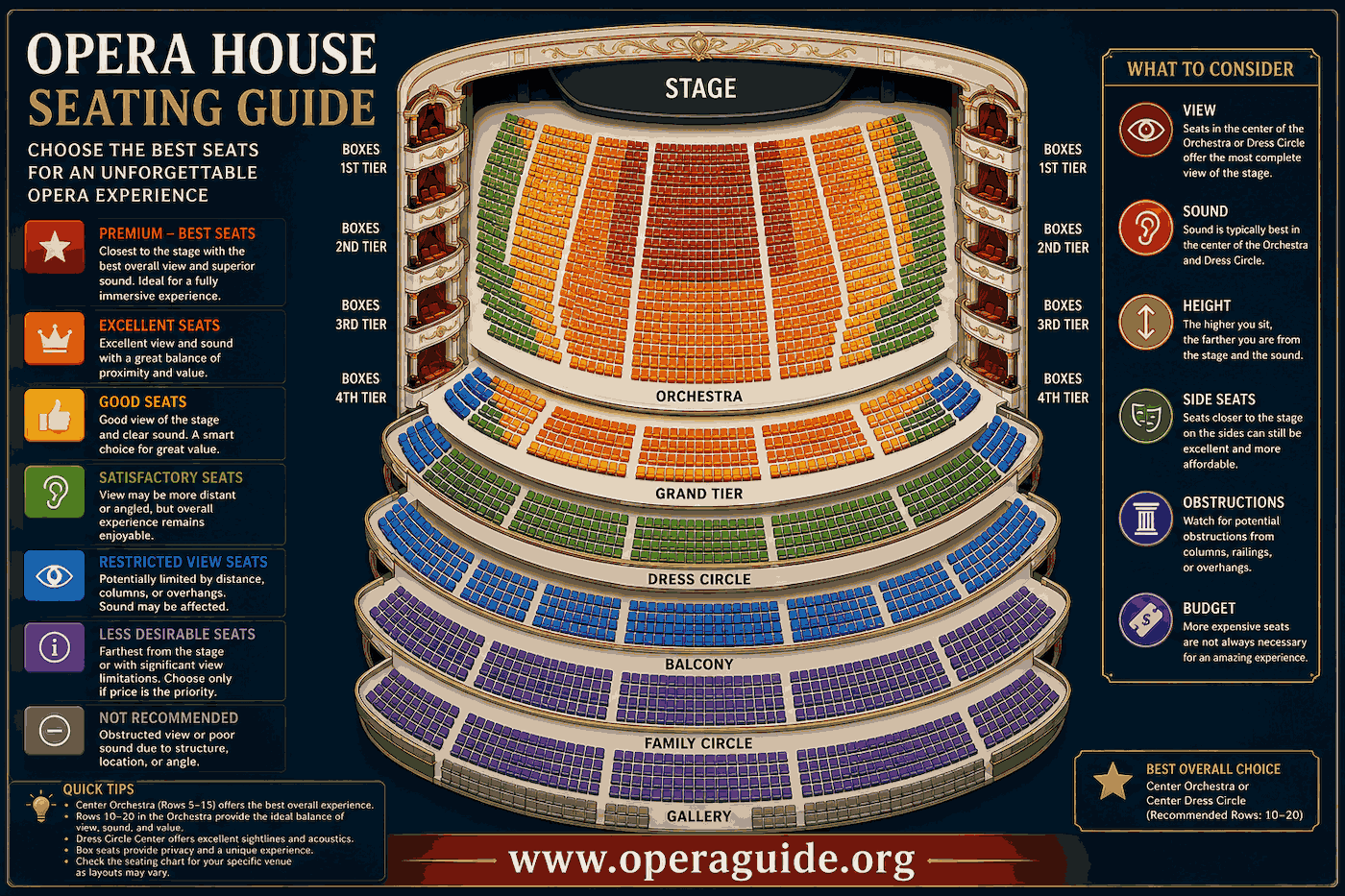
Find comfortable seats with excellent views and balanced acoustics.
Everything you need to enjoy your first opera with confidence.
Attending your first opera is easier than many people expect. Learn how to choose an opera, select the best seats, understand ticket options, follow basic etiquette, and prepare for an enjoyable performance at leading opera houses across North America.
 Muriel Kauffman Theatre - Kauffman Center for the Performing ArtsKansas City, MO
 Raleigh Memorial Auditorium At Martin Marietta Center for the Performing ArtsRaleigh, NC

Find comfortable seats with excellent views and balanced acoustics.
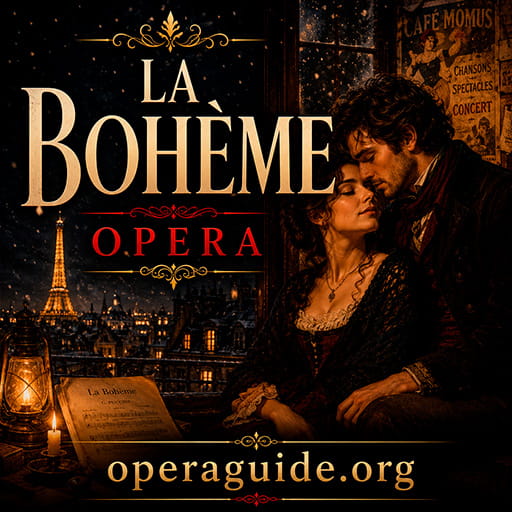
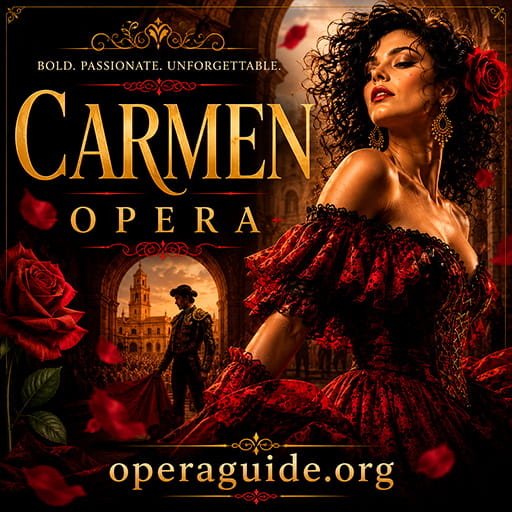
Many first-time visitors enjoy The Magic Flute, La Bohème, Carmen, The Barber of Seville, and La Traviata. These operas feature memorable music, engaging stories, and are performed regularly by leading opera companies.
Most opera performances welcome smart casual or business casual attire. Evening galas and opening nights may be more formal, but everyday performances generally do not require black tie or evening gowns.
Most operas last between two and four hours, including one or more intermissions. The exact running time depends on the production, composer, and performance schedule.
Center Orchestra, Grand Tier, and Dress Circle seats are excellent choices for first-time visitors. These sections typically provide balanced views, strong acoustics, and a comfortable introduction to the opera experience.
Audience members usually applaud after the overture, at the end of outstanding arias, and after each act. If you're unsure, simply follow the audience and enjoy the performance.
Yes. Most opera houses provide English supertitles or subtitles above the stage, making it easy to follow the story even when the opera is performed in Italian, French, German, or another language.