Use a typical opera house layout to compare major seating sections.
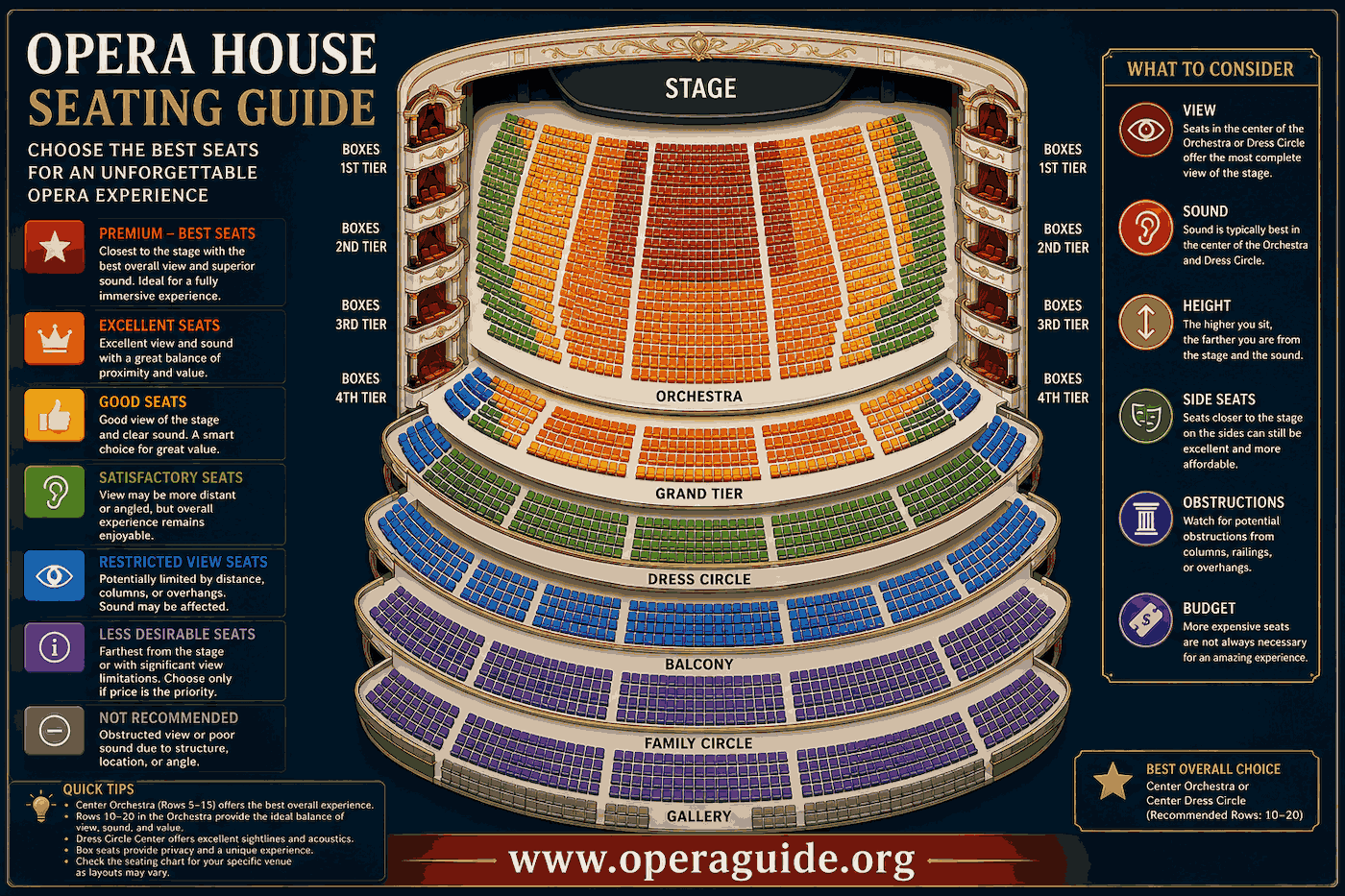
An opera seating guide showing the orchestra, tier, balcony, box, and budget seating sections.
Compare seating sections, views, acoustics, prices, and the best seats for every budget.
Choosing the right opera seats depends on your budget, preferred view, acoustics, and proximity to the stage. Compare orchestra, tier, balcony, box, and budget seating to find the best experience for first-time visitors, families, and experienced opera audiences.
Use a typical opera house layout to compare major seating sections.
An opera seating guide showing the orchestra, tier, balcony, box, and budget seating sections.
Dress circle seats balance price, sound, and visibility. Their elevated position makes staging easier to follow, while center sections often provide strong acoustics and better value than premium orchestra seats.
Balcony seats offer a wide view of the full stage at lower prices. Front-center rows usually provide the best value, while rear or upper sections may feel distant in larger opera houses.
Family Circle seating is generally located on the highest level and offers the lowest ticket prices. It suits budget-conscious visitors, although facial expressions and smaller staging details may be harder to see.
Box seats provide privacy, atmosphere, and a distinctive opera experience. Side boxes may have angled or partially obstructed views, so review the venue’s seating chart before purchasing.
Center orchestra and center first-tier seats are generally the best choices. Orchestra seats offer closer views, while the first tier often provides a more complete stage perspective and balanced acoustics.
Orchestra seating is better for seeing performers and stage details up close. Balcony seating provides a wider view of the full production and may offer better value, especially in the front-center rows.
The center of the first elevated tier often provides excellent acoustics because voices and orchestral sound blend before reaching the listener. Acoustic quality varies by opera house and production.
Box seats offer privacy, atmosphere, and a traditional experience, but side boxes may have angled or partially obstructed views. Review the venue’s seating chart before purchasing.
Front balcony, dress circle, and rear orchestra seats often provide the best balance of price and quality. Compare nearby sections and multiple dates to find the strongest value.
First-time visitors should consider center orchestra, first tier, or dress circle seats. These sections typically provide balanced sound, clear sightlines, and a complete view of the productio